
By invitation · 1980 — 1996
Nobody had ever seen this before.
An appreciation society for the years when a screen doing anything at all was astonishing. Four machines, sixteen years, and a few thousand people who got whole worlds out of hardware that had no business running them.
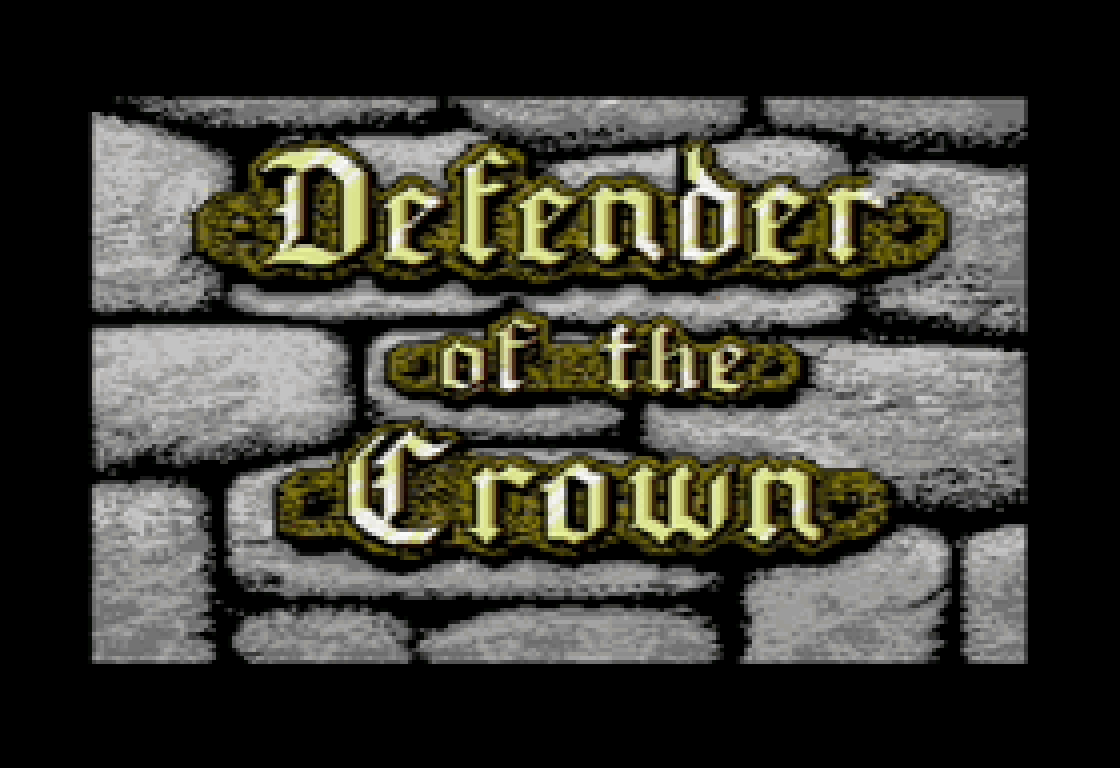
DEFENDER OF THE CROWN
APPLE ][
1980 — 1989 · 1,481 games
Six colours, and somebody drew a castle anyway.
The hi-res screen was 280 by 192 and it could show six colours, two of which changed if you put them next to each other. There was no sound chip — one bit, flipped by the processor, and everything you heard was somebody counting cycles. A game was one or two people for a year, in assembly, and it shipped on a floppy with a photocopied map in the box.

]
- 6502 · 1.023 MHz
- 48K
- 280×192 · SIX COLOURS
- ONE-BIT SPEAKER
![Mystery House on the APPLE ][](/static/images/screenshots/apple2-mystery-house-560x384.4add31c12b51.png)
MYSTERY HOUSE
The first adventure with pictures. Every room a line drawing.
![Apple Panic on the APPLE ][](/static/images/screenshots/apple2-apple-panic-560x384.6b4aad801975.png)
APPLE PANIC
Dig a hole. Wait. Drop something into it. That is the entire game.
![Snack Attack on the APPLE ][](/static/images/screenshots/apple2-snack-attack-560x384.035637ed8c59.png)
SNACK ATTACK
A maze game from the year everybody made one, and one of the few worth loading.
![Castle Wolfenstein on the APPLE ][](/static/images/screenshots/apple2-castle-wolfenstein-560x384.c303f7da1ddc.png)
CASTLE WOLFENSTEIN
Guards that shouted at you in German, through a speaker with one bit.
![Choplifter on the APPLE ][](/static/images/screenshots/apple2-choplifter-560x384.ad31dacbf453.png)
CHOPLIFTER
A rescue game in which you can land on the people you came for.
![Aztec on the APPLE ][](/static/images/screenshots/apple2-aztec-560x384.b8e80ae6f877.png)
AZTEC
A tomb explored sideways, with a machete, a pistol and dynamite.
![Miner 2049er on the APPLE ][](/static/images/screenshots/apple2-miner-2049er-560x384.9650a5e2298f.png)
MINER 2049ER
Every square of every floor had to be walked over. That was the whole idea.
![Lode Runner on the APPLE ][](/static/images/screenshots/apple2-lode-runner-560x384.c8ec7e473b45.png)
LODE RUNNER
150 levels, and an editor in the box so you could build the 151st.
![Karateka on the APPLE ][](/static/images/screenshots/apple2-karateka-560x384.2e797eaef2c2.png)
KARATEKA
Boot the disk upside down and the whole game runs upside down.
![The Bard's Tale on the APPLE ][](/static/images/screenshots/apple2-bards-tale-560x384.3f209209b8f4.png)
THE BARD'S TALE
A dungeon under a frozen town, mapped on graph paper because nothing else would.
![Ultima IV on the APPLE ][](/static/images/screenshots/apple2-ultima-iv-560x384.792bcaa5eae3.png)
ULTIMA IV
The first one you could not win by killing anything at all.
![Airheart on the APPLE ][](/static/images/screenshots/apple2-airheart-560x384.e7da924d2287.png)
AIRHEART
Dan Gorlin again, in a dithered pastel nobody else got out of six colours.
![Prince of Persia on the APPLE ][](/static/images/screenshots/apple2-prince-of-persia-560x384.f24e77b0dadd.png)
PRINCE OF PERSIA
Mechner filmed his brother running in a car park and traced every frame.
The title screen was a game's whole face here. There was no box on a shop shelf to look at and no advertising anybody would ever see, so the first thing the disk drew had to do all of it at once — and somebody sat down and drew each one a pixel at a time, in six colours, two of which would not sit beside each other.
COMMODORE 64
1983 — 1993 · 11,938 games
The one that got into the house.
Cheaper than the machines it beat and sold in a department store, so it ended up in bedrooms rather than studies — and it arrived with hardware nothing else had at the price: sprites the chip moved for you, a scrolling register, and the SID, a real three-voice synthesiser with filters, which is why people still cover music written for it. Games came on tape, took four minutes to load, and were written by teenagers as often as by companies.

READY.
- 6510 · 0.985 MHz
- 64K
- VIC-II SPRITES
- SID 6581 · 16 COLOURS
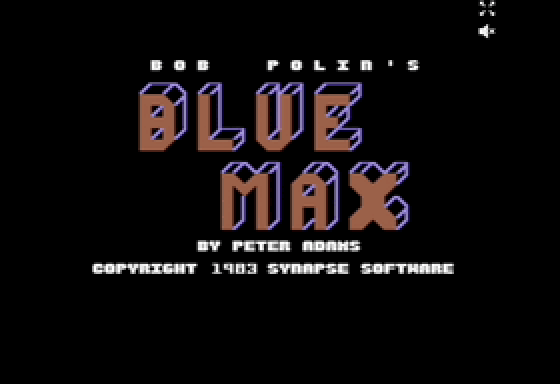
BLUE MAX
Isometric, diagonal, and scrolling in a direction the hardware was not built for.
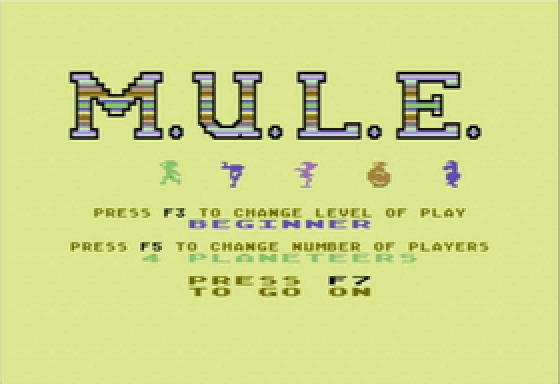
M.U.L.E.
Four players economically ruining each other on one keyboard. Still unbeaten at it.
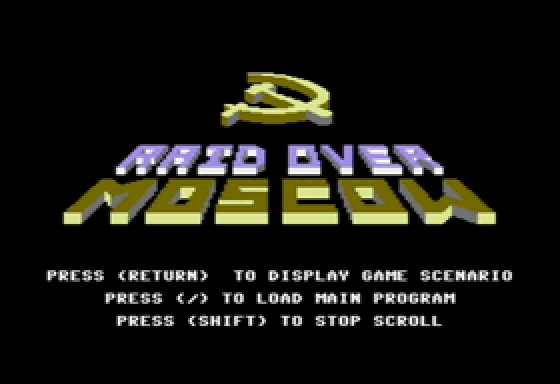
RAID OVER MOSCOW
Denounced in three parliaments, which did its sales no harm whatsoever.
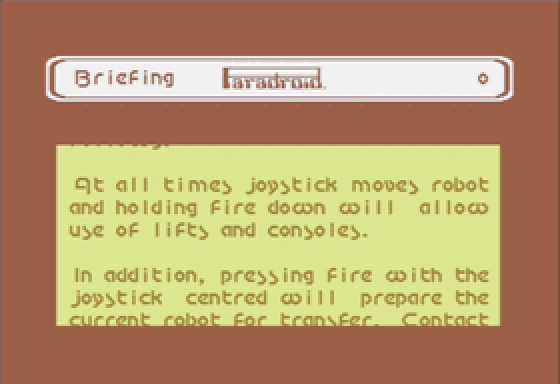
PARADROID
You do not shoot the robots. You take them over, one circuit puzzle at a time.
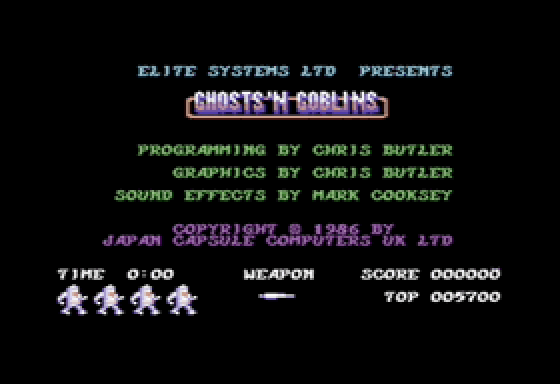
GHOSTS 'N GOBLINS
Finish it and it tells you the first run was a dream, then makes you do it again.
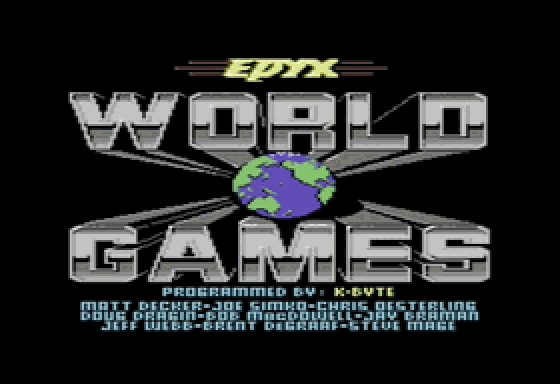
WORLD GAMES
Eight events, eight countries, and a joystick that did not survive the caber.
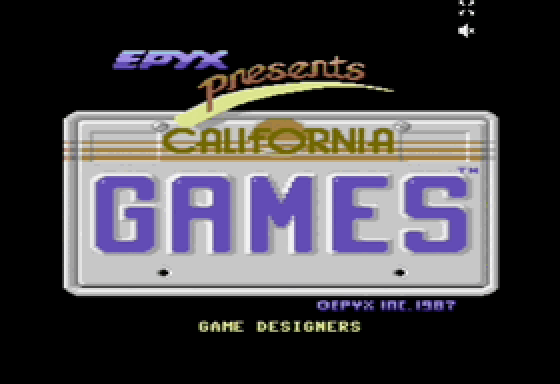
CALIFORNIA GAMES
Epyx stopped pretending it was the Olympics and let you do a half-pipe instead.
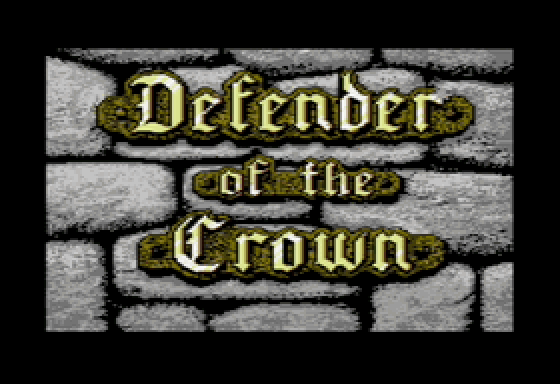
DEFENDER OF THE CROWN
It looked like a painting, which on this machine nobody thought was available.
Almost every C64 disk that survived is a CRACKED one, so the first thing most of these images shows is not the game at all — it is the calling card of whoever broke the copy protection, signed it and passed it on. A whole second culture grew up inside the software, and it is the reason any of it still exists.
MS-DOS
1989 — 1996 · 7,666 games
320 by 200, and all 256 colours at once.
Mode 13h gave you a quarter of a megabyte of screen and a palette you chose yourself, and a Sound Blaster gave the room something better than a beep. What actually moved these games was the postage: publishers put episode one in the wild for nothing and let people copy it, and a game could be everywhere in a week without a shop ever stocking it.

C:\>
- VGA MODE 13H
- 320×200 · 256 COLOURS
- SOUND BLASTER
- SHAREWARE
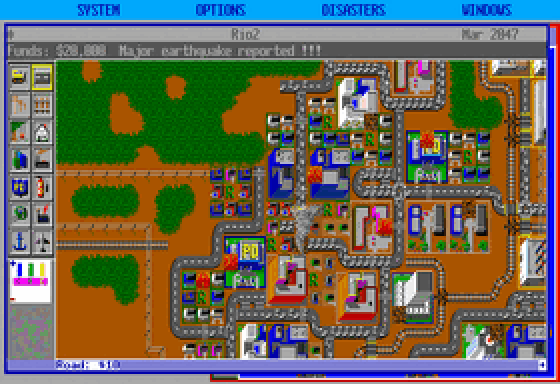
SIMCITY
A game with no way to win, which publishers kept calling the problem with it.
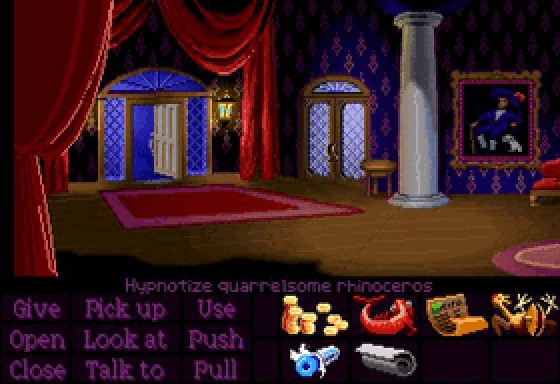
THE SECRET OF MONKEY ISLAND
You could not die, and it was funnier for it.
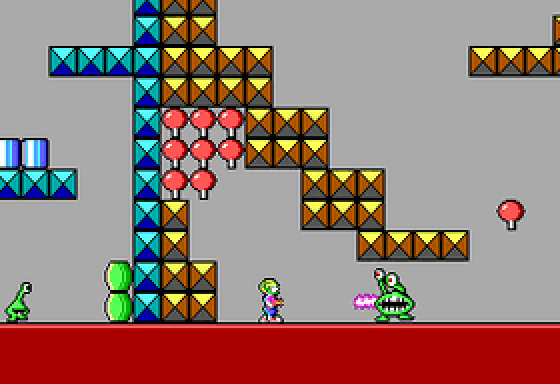
COMMANDER KEEN
Smooth scrolling on hardware everybody agreed could not do smooth scrolling.
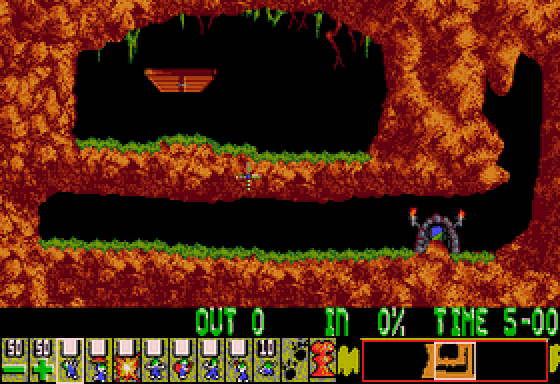
LEMMINGS
You control nobody. You only change what is in front of them.
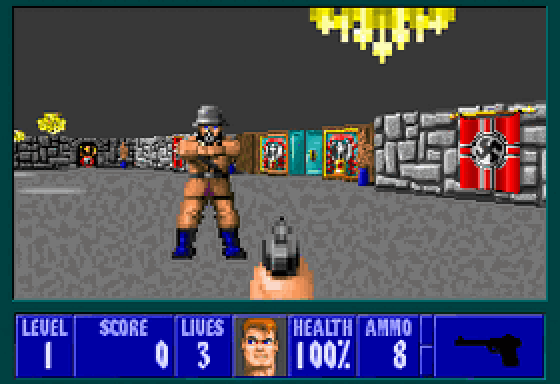
WOLFENSTEIN 3D
Episode one cost nothing, which is exactly how it got everywhere.
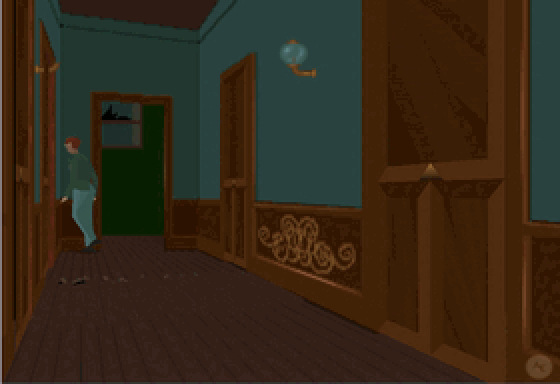
ALONE IN THE DARK
Polygon people walking through painted rooms, and it was frightening.
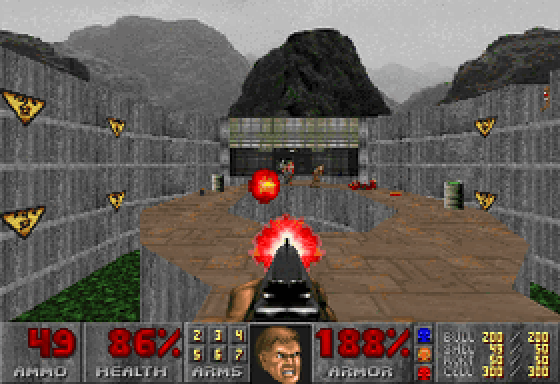
DOOM
Uploaded to a university FTP server that fell over under the weight of it.
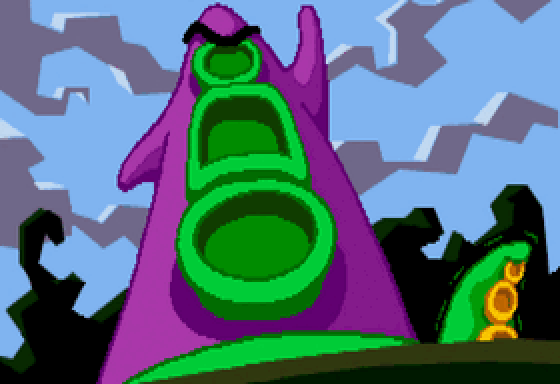
DAY OF THE TENTACLE
Three centuries at once, and a puzzle you solve in one to change another.
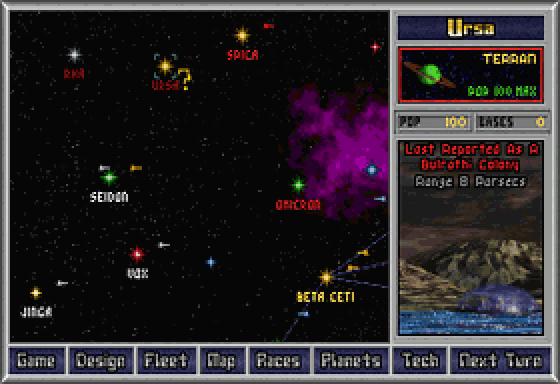
MASTER OF ORION
Turn-based, and it quietly took the entire night.
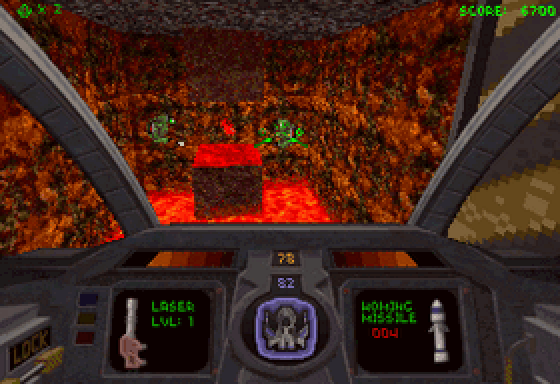
DESCENT
Six degrees of freedom, and a generation discovering it got motion sick.
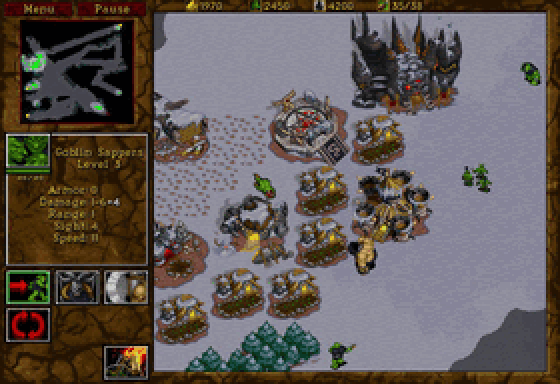
WARCRAFT II
Two players over a modem, which meant one household phone line.
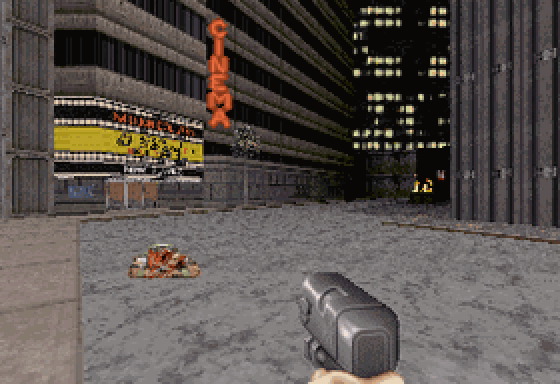
DUKE NUKEM 3D
Rooms stacked above rooms, which the engine before it could not draw.
AND WHAT THEY CAME IN.
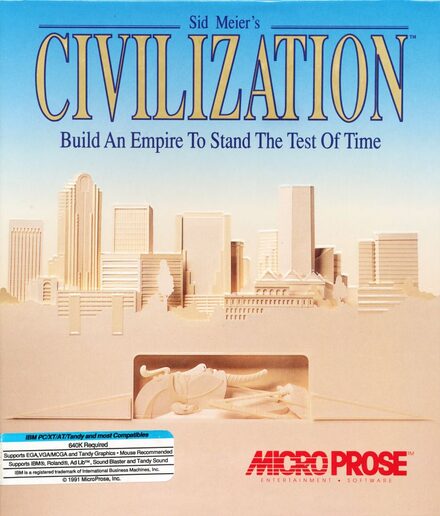
SID MEIER'S CIVILIZATION
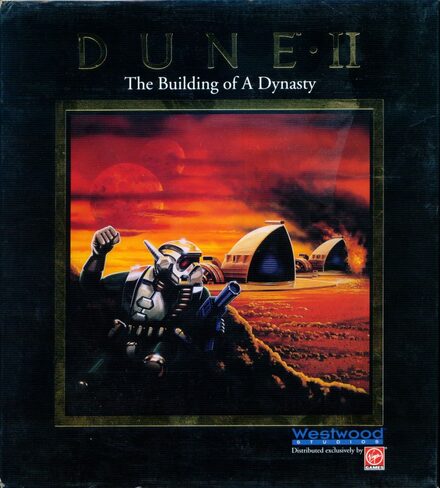
DUNE II
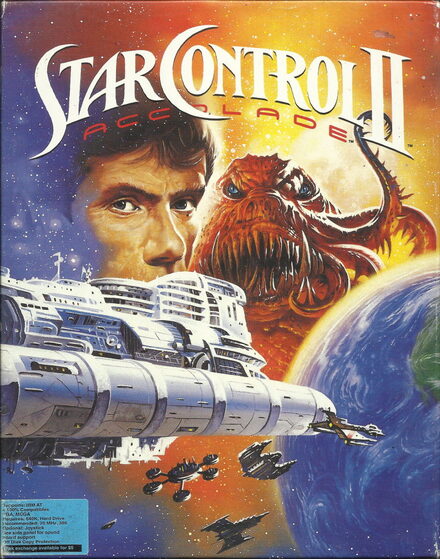
STAR CONTROL II
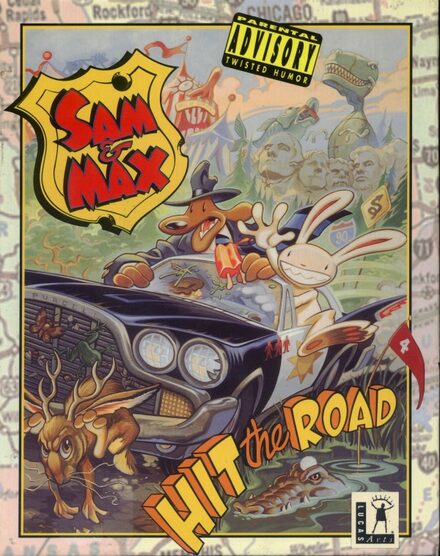
SAM & MAX HIT THE ROAD
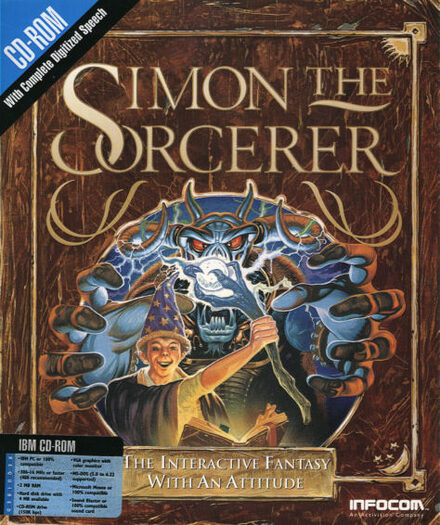
SIMON THE SORCERER
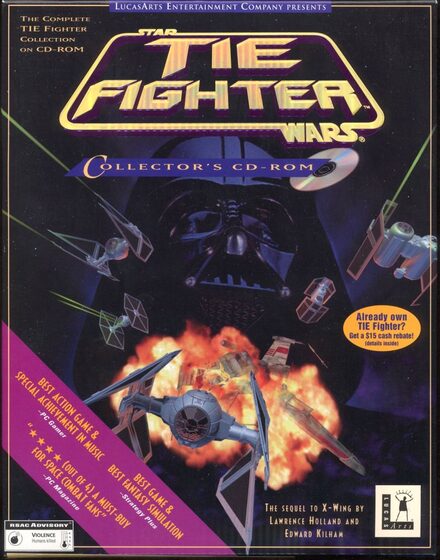
STAR WARS: TIE FIGHTER
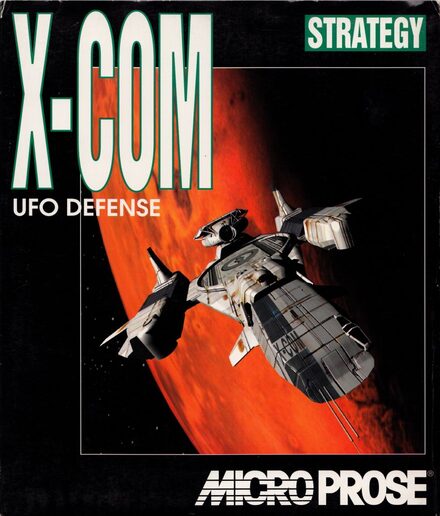
X-COM: UFO DEFENSE
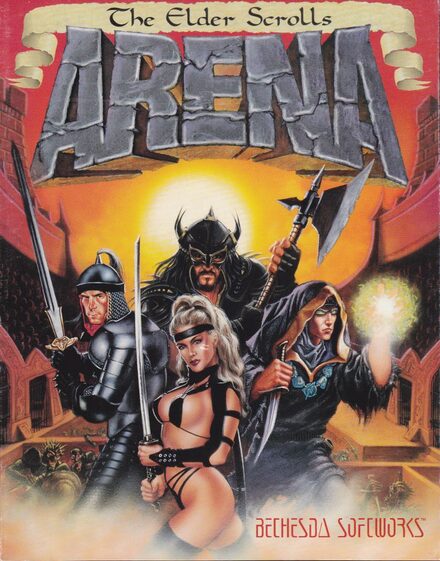
THE ELDER SCROLLS: ARENA
Seven years in which the screen never changed size and everything else did — flat to isometric to polygonal to a room stacked above another room, all of it inside the same 320 by 200 window.
THE ARCADE
1980 — 1996 · 2,157 cabinets
Hardware built for exactly one game.
There was no general-purpose machine. Each cabinet was a board designed around a single idea and thrown away when the idea was finished — a beam that drew lines instead of pixels, two joysticks because one could not say move and shoot at once, a set of bicycle handlebars bolted to the front. You had one coin and about ninety seconds to justify it.

INSERT COIN
- PURPOSE-BUILT BOARDS
- VECTOR AND RASTER
- ONE COIN
- NO CONTINUES

DEFENDER
Five buttons and a stick. Nobody could play it and everybody fed it.

BERZERK
It talked. In 1980 a machine shouting at you across a room was new.

CENTIPEDE
Dona Bailey co-designed it, and the trackball made it feel like nothing else.

MISSILE COMMAND
You cannot win. You only choose which city to lose.

JOUST
Two players, one screen, and the standing question of whether you were friends.

ROBOTRON: 2084
Two joysticks, because one could not say move and shoot at the same time.

DIG DUG
Inflate them until they burst. The music only plays while you are walking.

SINISTAR
“I hunger.” It came for you, and it was faster than you were.
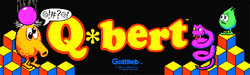
Q*BERT
Swearing, rendered entirely as punctuation.

MARBLE MADNESS
Six levels against a clock, and most people never saw the last one.
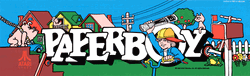
PAPERBOY
The controller was a set of handlebars.

RAMPAGE
Three players, one city, and you are the monsters.

MORTAL KOMBAT
Digitised actors, and a code parents first heard about on the news.
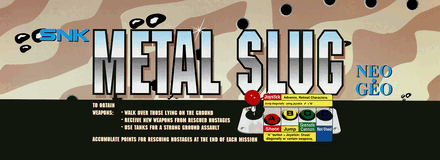
METAL SLUG
Drawn by hand, frame by frame, in the year everything else went 3D.
The marquee is the part you could see from the door. It is the only piece of an arcade game designed to be read across a room over other people's heads, which is why it is lit, why it is three feet wide, and why you can still name every one of these forty years later.
MEMBERSHIP
By invitation, and it stays small.
There is no sign-up form, no waiting list and nothing to buy. Membership comes from somebody already here, one person at a time, because a room this specific stops being worth sitting in the moment it stops being small.
Members bring their own disks. Nothing is distributed from here — the society publishes names, years, authors and pictures, and what you play is what you already own. That has been the arrangement since the first day and it is not going to change.